Scroll through the websites of a handful of care homes and you might notice something.The names are different. The buildings are different. The people are different.
But the language? Often, remarkably similar.
Exceptional care.
Person-centred approach.
Beautiful surroundings.
Compassionate team.
Home from home.
Outstanding facilities.
Strong sense of community.
Of course, none of these things are bad.
The problem is that when everyone is saying them, they stop telling families very much. Care home marketing has become very good at communicating the things we know families want to hear.
And understandably so. Choosing care is an emotional decision and care providers don’t want to take risks with how they present themselves.
But somewhere along the way, we may have confused reassurance with familiarity.
If every care home describes itself as warm, welcoming and person-centred, how does a family know which one is actually right for their mum or dad?
The answer can’t simply be another adjective.
It has to be evidence.
Choosing a care home can be an overwhelming experience for families. Research published by Care England and Log my Care in April 2026 found that 97% of families surveyed said they found arranging care difficult. Interestingly, only 19% said they used inspection reports, such as CQC ratings, when researching their options.
That presents an opportunity for care homes. While formal ratings have an important role to play, families also need to build a picture of what life might actually look like for someone they love. And that takes more than a list of reassuring words. It takes real stories, visible experiences and evidence of what makes a home different.
“Person-centred” doesn’t mean much on its own
Take one of the most commonly used phrases in care marketing: person-centred care.
It sounds reassuring. And it is an important principle. But what does it actually look like?
Does it mean residents can have breakfast at 10am because they prefer a lie-in?
Does it mean someone can continue their gardening hobby?
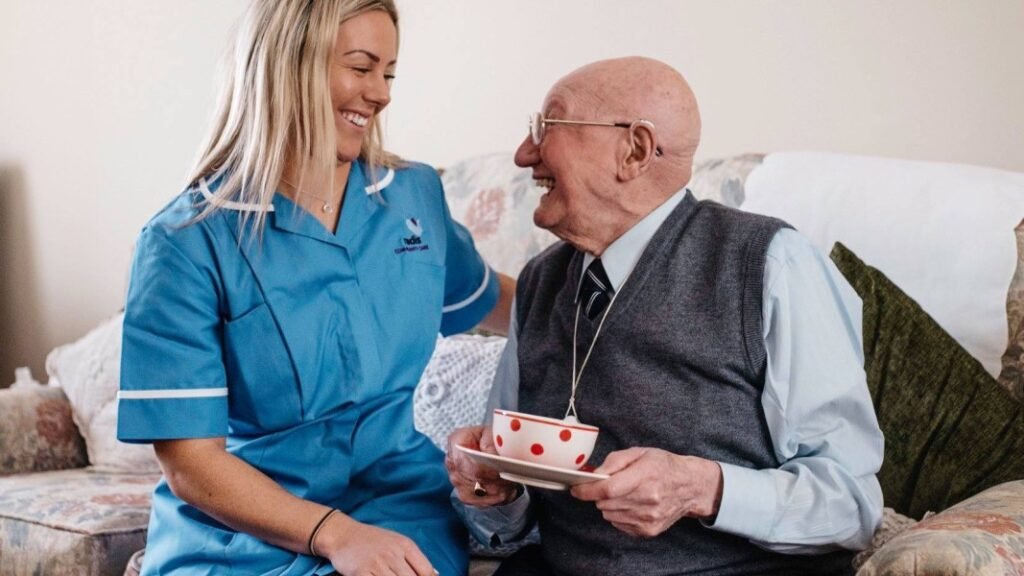
Does it mean the team knows that a particular resident always wants tea in their favourite mug?
Does it mean a resident’s love of football, music, baking or ballroom dancing becomes part of everyday life?
Those are the stories that bring person-centred care to life.
Instead of telling families “we provide person-centred care”, show them what that means on a Tuesday afternoon. That’s far more powerful, especially via social media.
The same goes for “community”
Community is another word that appears everywhere.
But a photograph of a group of residents smiling around a table doesn’t necessarily tell us what makes that community special.
What are they talking about? What traditions have they created? Who visits? What happens when a new resident arrives? What makes someone feel that they belong?
The strongest care home marketing doesn’t just show that people are together.
It shows what life feels like when you’re part of that place.
Families don’t need more claims. They need reasons to believe.
This is where care home marketing has an opportunity to become much more interesting.
Instead of asking:
“What do families want us to say?”
Perhaps we should be asking:
“What is genuinely different about us and how can we prove it?”
That might be something big. It might be the specialist expertise of the team, an innovative approach to dementia care, an exceptional activity programme or a particularly strong connection with the local community.
But it might also be something much smaller. The way staff know residents’ routines, the resident who still has their own vegetable patch, the weekly pub trip, the grandchildren who regularly come for Sunday lunch and the staff member who has worked there for 15 years and knows every resident by name.
These details might not sound like traditional marketing but that’s precisely why they work.
Perhaps care home marketing needs to be a little braver
We don’t think care homes need to abandon the reassuring language that families expect.
But they could rely on it less. Because ultimately, a family choosing a care home isn’t comparing a list of adjectives – they’re trying to imagine someone they love living there.
Will Mum feel comfortable?
Will Dad have people to talk to?
Will they still be themselves?
Will the staff understand them?
Will they have a life – not simply receive care?
Those questions can’t be answered by “exceptional” or “outstanding” alone.
They are answered by stories, experiences, people and proof.
The future of care home marketing isn’t necessarily about saying more. It might be about saying something only you could say. And perhaps that’s the challenge for all of us in care marketing:
Stop asking what sounds good. Start asking what is true, distinctive and worth telling.